Japan's train system is a miracle of engineering and a puzzle designed by someone who enjoys watching tourists cry. It's efficient, clean, punctual to the second, and so complex that even locals get confused sometimes. But once you understand the basics, it's the best public transit in the world. Here's everything you need to know to not look like a complete beginner. We've made every mistake possible on these trains, so you don't have to.
IC Cards — Suica, Pasmo, and Tap-and-Go Life
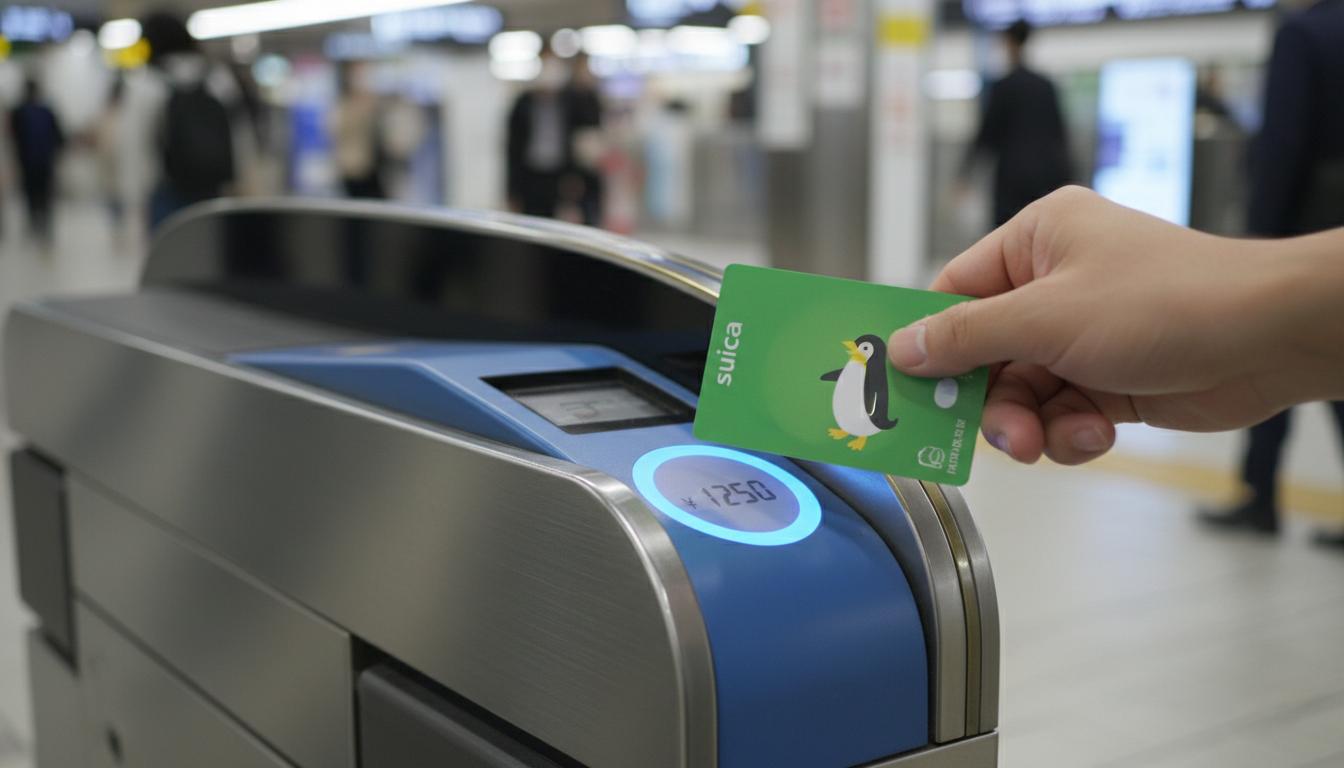
Tap and go. It works on trains, buses, and at the konbini.
The first thing you should do when arriving in Japan is buy an IC card. Suica and Pasmo are the two main brands, and they're functionally identical. The card works like a rechargeable prepaid card. You tap it on the reader at the station gate, and the fare is automatically deducted. No need to figure out ticket prices. No need to buy individual tickets. Just tap and walk through. It's the single most important piece of advice we can give anyone visiting Japan for the first time.
You can buy a Suica or Pasmo at any major train station from the ticket machines. The machines have English options. The card costs a 500 yen deposit, which you get back when you return the card. You can recharge at any station machine, at konbini counters, or even at some vending machines. The balance shows on the gate display every time you tap through. We've seen tourists spend fifteen minutes studying ticket maps while locals just tap and walk past them. Don't be the person studying the map. Get the card.
The real magic is that IC cards work everywhere. Not just on JR trains, but on subways, private rail lines, buses, and even for purchases at konbini, vending machines, and some restaurants. We've paid for entire meals with our Suica. We've bought coffee with it. We've used it to pay for taxis. It's essentially a debit card for city life, and once you have one, you'll wonder how you ever traveled without it. It's the most convenient thing about Japan, and that's saying something in a country where convenience is an art form.
There are also mobile versions. If you have an iPhone, you can add Suica to Apple Wallet and recharge it with any credit card. This is genuinely game-changing. No more fumbling for your card at the gate. Just tap your phone. Android users can do similar with Google Wallet, though availability varies by region. We've been using mobile Suica for two years now and going back to a physical card feels like returning to the Stone Age.
One warning: IC cards don't automatically give you the best fare. For long-distance travel between cities, buying a specific ticket or a rail pass is cheaper. But for daily city travel, the IC card is unbeatable. The convenience alone is worth the slight premium. And the time you save not standing in line for tickets is worth more than any fare difference.
Last Train Culture — Midnight Is a Hard Deadline
Japan's trains stop running around midnight. Not approximately midnight. Exactly midnight, sometimes a few minutes after, depending on the line and the day. Miss the last train and your options are a taxi that costs more than your hotel room, or staying out until the first train at 5am. There is no in-between. There are no night buses. There is no late-night service. Midnight means midnight.
This creates a phenomenon known as last train culture. The hour before midnight, trains fill with slightly drunk salarymen and women who stayed out too late at the izakaya. There's a sense of urgency in the air. Everyone is checking their phone, calculating whether they can make the transfer at Shibuya, hoping their line hasn't already stopped for the night. We've been on last trains that felt like evacuations, with everyone pressed together in a shared mission to get home before the system shuts down.
If you miss the last train, don't panic. Tokyo and Osaka have capsule hotels near major stations specifically for this situation. They're cheap, clean, and weirdly comfortable. You get a small private pod with a TV, outlets, and just enough room to lie down. It's not glamorous, but it's better than a 10,000 yen taxi ride. We've slept in capsule hotels more times than we care to admit, and we've grown weirdly fond of them. There's something comforting about the ritual: shoe locker, yukata, toothbrush, pod.
To avoid the last train stress, check the schedule before you go out. Google Maps shows the last train time for your route. We always check before a night out, and we set an alarm for 30 minutes before the last train. It's not the most spontaneous way to travel, but it's better than explaining to a taxi driver where you're going while calculating the damage to your wallet. A taxi from central Tokyo to the outer wards can easily cost 5,000 to 10,000 yen. From Tokyo to Yokohama, expect 15,000 yen or more.
Rush Hour — Where Dreams Go to Die
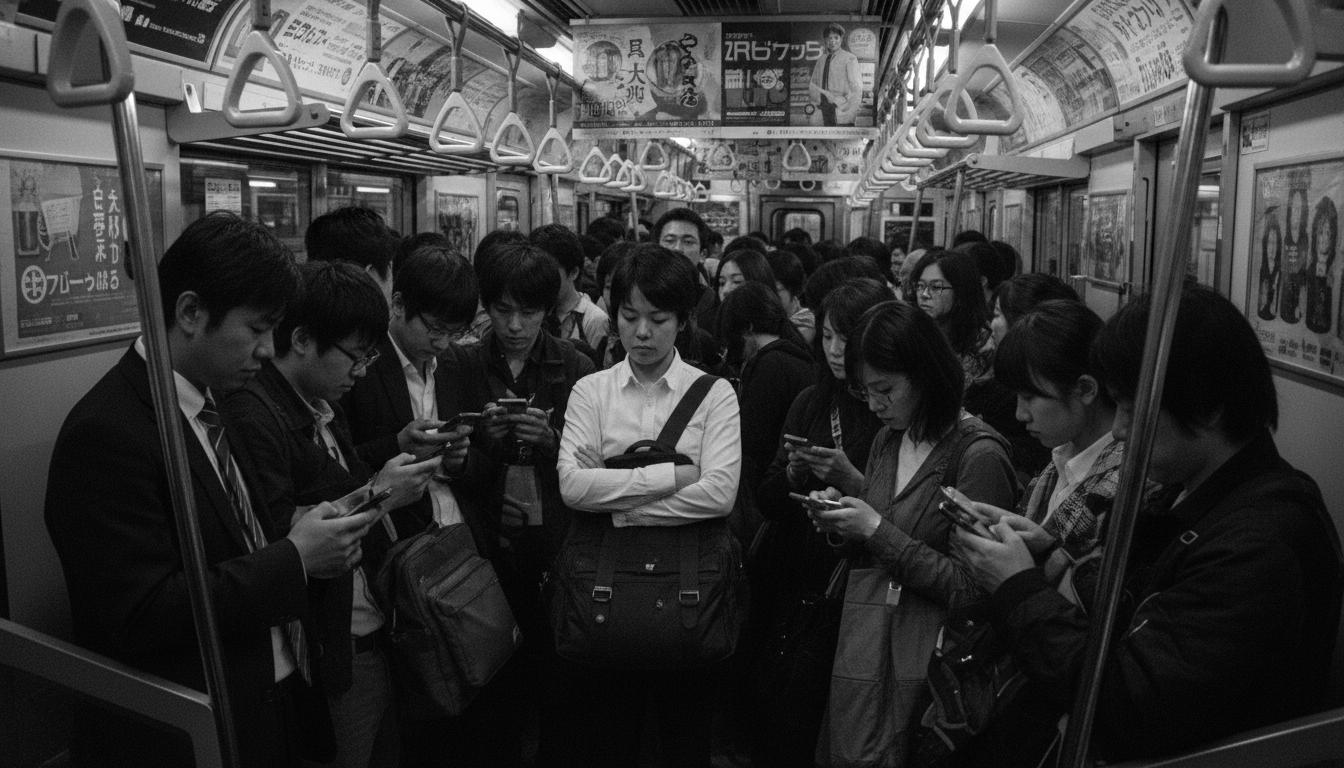
Rush hour on the Yamanote Line. Avoid it if you value personal space.
Rush hour on the Yamanote line is where dreams go to die. Between 7:30am and 9am, and again from 5:30pm to 7pm, Tokyo's trains transform from efficient transit into compressed human storage. Platforms fill to capacity. Train cars reach densities that would concern a fire marshal. And everyone just accepts it as normal. Japanese commuters have a remarkable ability to remain completely expressionless while being pressed against strangers on all sides. It's a survival skill.
If you're traveling for leisure, there is no reason to be on a train during rush hour. None. Adjust your schedule. Sleep in. Have a long breakfast. Visit a neighborhood that doesn't require the Yamanote line. The 15 minutes you save by traveling during peak hours will be the most miserable 15 minutes of your day. We've done it exactly once by accident, and that was enough. Never again.
If you absolutely must travel during rush hour, follow local etiquette. Have your bag in front of you or held above your head. Don't hold the overhead straps with both hands, because that means your armpit is in someone's face. Let people off the train before pushing on. And accept that you will be touched by strangers. It's unavoidable. We recommend finding a spot near the door and accepting your fate with dignity.
Women should know that most lines have women-only cars during morning rush hour. They're marked on the platform and usually the first or last car of the train. These exist because of chikan, the Japanese term for groping on crowded trains, which remains a persistent problem despite awareness campaigns and increased enforcement. If you're uncomfortable, use these cars. They're clearly marked and nobody will judge you for it.
Shinkansen — The Bullet Train
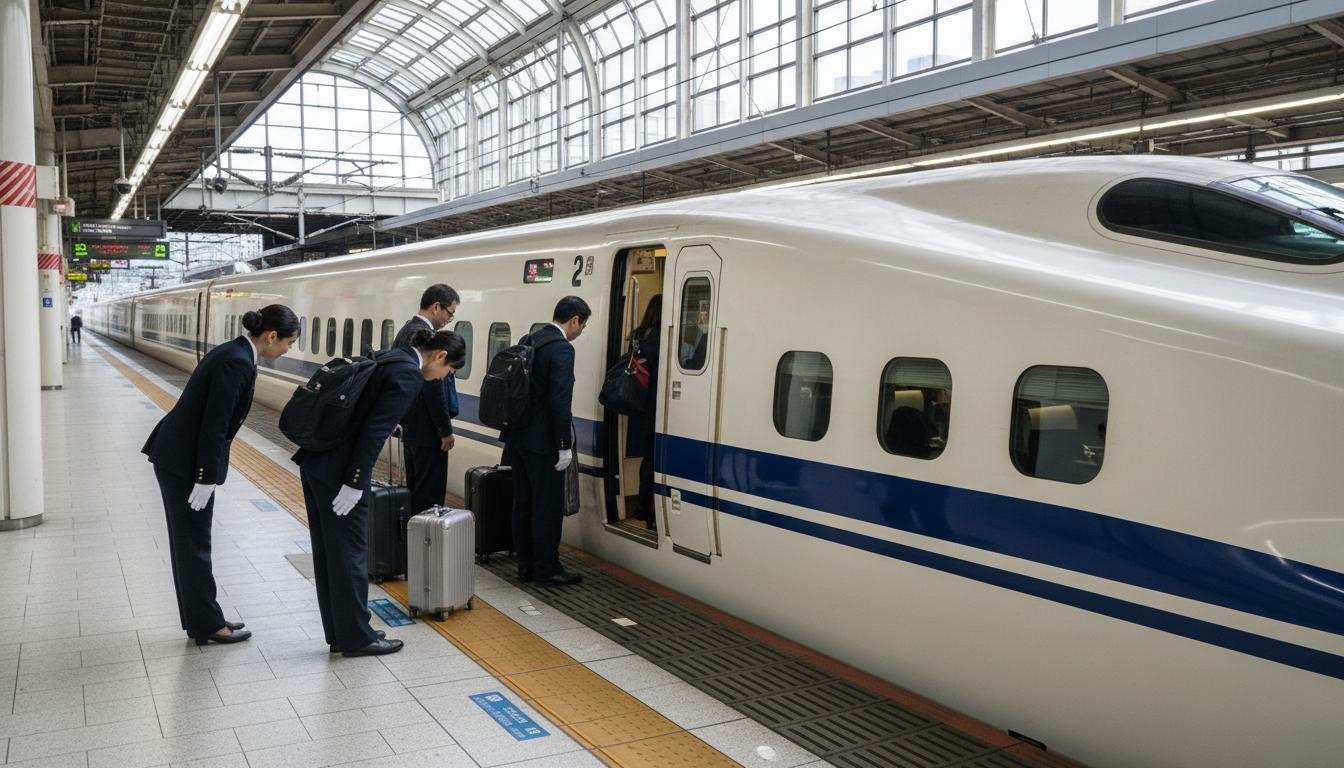
The Shinkansen. 320 km/h of punctuality and comfort.
The Shinkansen is Japan's high-speed rail network, and it lives up to every bit of hype you've heard. Trains reach speeds of 320 kilometers per hour. The ride is so smooth you can balance a coin on its edge. They're rarely late, and when they are, the railway issues formal apologies. The Tokaido Shinkansen, connecting Tokyo to Osaka, departs every few minutes and carries more passengers than most countries' entire rail networks. It is, without question, the best way to travel between Japanese cities.
For tourists, the Japan Rail Pass can be a good deal if you're doing multiple long-distance trips. It covers all JR trains, including most Shinkansen, for a flat fee over 7, 14, or 21 days. Do the math before buying. A round trip between Tokyo and Osaka almost pays for a 7-day pass. Add a side trip to Kyoto or Hiroshima and you're saving money. But if you're only doing one long trip, buying individual tickets is cheaper. Don't buy the pass reflexively. Calculate your actual itinerary first.
On the Shinkansen, you can buy ekiben, special bento boxes designed for train travel. Each station has its own signature ekiben, featuring local ingredients. Eating an ekiben while watching the Japanese countryside blur past at high speed is one of the great travel experiences. Buy one before boarding at the station, or from the cart that rolls through the train. The cart usually has a limited selection, so buying at the station gives you more options. Our favorite is the Gyuniku Domannaka from Yonezawa station, featuring local beef over rice. It's expensive for a bento, but worth it.
Train etiquette matters. Keep your phone on silent. Don't talk loudly. If you must take a call, move to the area between cars. The no-phone rule is especially strict in the green cars and reserved seating areas. People take it seriously, and you should too. We've seen passengers glare at someone for having a notification sound go off. The Shinkansen is a quiet zone, and the social pressure to maintain that silence is intense.
Buses — Board Back, Pay Front
Tokyo's bus system is less intimidating than it looks, though it's primarily useful in areas not well served by trains. In Kyoto, buses are essential because the subway coverage is limited. The basic rule is the same everywhere: board through the back door, take a numbered ticket from the machine, and pay when you exit through the front door.
The fare is determined by the number on your ticket and the fare board at the front of the bus. The board shows the current fare for each number, increasing as the bus travels. When your stop approaches, press the button to signal the driver. Then drop your exact fare and ticket into the box near the driver. If you don't have exact change, there's a change machine on the bus that breaks bills and coins. It's a slightly confusing system the first time, but you'll get the hang of it quickly.
IC cards simplify this significantly. Tap your Suica or Pasmo when you board, tap again when you exit, and the correct fare is deducted automatically. No tickets, no change, no math. If you're taking more than a couple of buses, an IC card is essential. We can't imagine navigating Kyoto without one. The alternative is carrying a pocketful of coins and trying to read the fare board while the bus is moving.
Taxis — Automatic Doors and No Tipping
Japanese taxis are clean, safe, and expensive. The drivers wear uniforms and white gloves. The doors open and close automatically, so don't try to handle them yourself. You'll look like an amateur, and the driver will have to tell you to let go. It's embarrassing for everyone involved. We still forget sometimes, and the driver's resigned expression reminds us that tourists have been making this mistake for decades.
Fares start around 500 yen for the first kilometer and increase rapidly from there. A taxi from central Tokyo to the suburbs can easily cost 5,000 to 10,000 yen. Late night fares add a surcharge. Highway tolls are added to your fare. In short, taxis are for short trips, emergencies, and nights when you missed the last train. They're not a primary mode of transport unless you're very wealthy or very desperate.
Payment is usually cash, though an increasing number of taxis accept IC cards and credit cards. Look for the payment stickers on the window. Tipping is not done in Japan. The driver will return your exact change. Just say thank you and get out. Don't try to tip. It's not expected and it creates an awkward situation. The driver will assume you don't understand how money works.
Ride-sharing apps like Uber exist but are limited. Uber in Japan primarily connects you to taxi drivers rather than private cars, and the pricing is similar to hailing a cab directly. The main benefit is avoiding language issues when giving your destination. We've used Uber in Tokyo exactly once, when we couldn't pronounce the name of our hotel clearly enough for a taxi driver to understand. The app solved that problem instantly.
Getting Lost — Everyone Does It
You will get lost in Japan. It's inevitable. Tokyo's address system is based on block numbers rather than street names, which means even GPS sometimes struggles. Shinjuku station has over 200 exits and handles 3 million people daily. We've gotten lost in Shinjuku more times than we can count, and one of us lives here. Alex once spent forty minutes trying to find the south exit, which he had found dozens of times before. The station just decided to confuse him that day.
Station staff are incredibly helpful. Every station has a manned counter where you can ask for directions. They have maps. They'll mark your route. Many will walk you part of the way if they're not busy. Google Maps works underground in most stations now, which is a recent and life-changing development. It didn't used to work, and finding your platform in Shinjuku without it was a genuine challenge.
The best advice we can give is to not stress about it. Getting lost in Japan is safe. There are no bad neighborhoods in central Tokyo. You'll find something interesting wherever you end up. Some of our best discoveries came from wrong turns and missed exits. Embrace the chaos. The trains will still be running when you find your way back. And if they're not, well, there's always the capsule hotel.
Regional Transit — Beyond Tokyo
Tokyo's transit system gets most of the attention, but Japan's other cities have their own quirks worth knowing about. Osaka's subway is straightforward and color-coded, with fewer lines than Tokyo but better coverage of the areas tourists actually want to visit. The Midosuji Line, running north to south through the city, is your main artery. Get to know it. Fukuoka has only three subway lines and they're all useful. The city is compact enough that you can walk most of the central areas, which is part of its charm.
Kyoto is the city where tourists struggle most with transit. The subway only has two lines and doesn't cover most of the major tourist sites. Buses are essential in Kyoto, and they fill up fast. The number 100 and 206 buses connect Kyoto Station to the main temple districts, and they run frequently. But during cherry blossom season and autumn foliage season, expect to wait in line for multiple buses before you can board. Consider renting a bicycle for Kyoto. The city is flat, the streets are on a grid, and biking is often faster than the bus.
Hiroshima has streetcars. Actual streetcars that run through the city center, clanging their bells and stopping traffic. They're charming and efficient and a refreshing change from underground metros. The Hiroshima Sightseeing Loop Bus covers the main tourist sites and runs every 15 minutes. It's the easiest way to get to the Peace Memorial Park from the station.
Etiquette — How to Not Annoy Everyone
Japanese transit has unwritten rules that locals follow instinctively. On escalators, stand on the left in Tokyo and on the right in Osaka. This seems like a minor detail until you find yourself blocking the flow of commuters who are trying to walk past you. On platforms, line up where the floor markings indicate the train doors will be. Don't push to the front when the train arrives. Wait for people to exit before entering. It's basic courtesy, but you'd be surprised how many tourists treat the train like a competitive event.
On the train itself, keep conversation quiet. Don't talk on your phone. Don't eat anything that smells strong. Don't put bags on seats. Offer your seat to elderly passengers, pregnant women, and people with injuries. These rules are followed even when the train is half-empty, which tells you something about how deeply ingrained they are. We've seen teenagers offer their seats to old women while looking at their phones, as if it were a reflex. It probably is.
Be especially careful on the Shinkansen. The quiet car rules are enforced socially, not by staff. If you're in a quiet car and someone can hear your music through your headphones, you're doing it wrong. If you need to take a phone call, move to the area between cars. No exceptions. The Shinkansen is Japan's flagship transit experience, and the behavior standards reflect that.
Airport Transit — Getting to and From the City
Narita Airport is not actually in Tokyo. It's in Chiba Prefecture, about 60 kilometers from the city center. This surprises a lot of first-time visitors who expect to step off the plane and be in Shibuya. The Narita Express (N'EX) is the fastest train to central Tokyo, taking about an hour to reach Tokyo Station. It costs around 3,000 yen and is comfortable and reliable. The Skyliner is another option, slightly faster but going to Ueno rather than Tokyo Station. Choose based on where you're staying.
Haneda Airport is much closer to central Tokyo, which is why we recommend flying into Haneda whenever possible. The Tokyo Monorail and Keikyu Line both connect Haneda to the city in 20 to 40 minutes, depending on where you're going. Tickets cost around 500 yen. Haneda feels more manageable than Narita, especially after a long flight. You clear customs, get your bags, and suddenly you're in the city. It's a much better first impression of Tokyo.
Kansai International Airport serves Osaka, Kyoto, and the Kansai region. It's built on an artificial island in Osaka Bay, which sounds impressive and is, but it also means the airport is 40 kilometers from Osaka. The Nankai Rapi:t train gets you to Namba in about 40 minutes. The JR Haruka Express goes to Shin-Osaka and Kyoto. Both cost around 1,500 yen. The journey across the bay on the airport bridge is actually quite scenic, especially at sunset.
Pocket WiFi and SIM Cards
This isn't strictly transit, but it's essential for getting around. You need internet access in Japan. Google Maps is your lifeline for train schedules, platform numbers, and walking directions. Translation apps are essential for reading menus and signs. Pocket WiFi devices and SIM cards are available at all major airports. Order online before your trip and pick up at the airport counter. It's cheaper than renting at the airport, and you'll have internet the moment you land.
Pocket WiFi is our preference for most travelers. One device connects multiple phones, the battery lasts all day, and the connection is reliable. SIM cards work too, but switching SIMs can be a hassle, and you lose your home number for the duration of your trip. Most modern phones support eSIM, which is the best of both worlds. Research your options before you travel and book in advance. Being without internet in Japan is significantly harder than being without internet almost anywhere else.
Useful Apps for Getting Around
Google Maps works well in Japan for transit directions, walking routes, and business listings. It's our primary navigation tool. The Japan Transit Planner app by Jorudan is excellent for complex train journeys involving multiple transfers. Hyperdia is another popular option, though the interface is dated. For real-time train status and delay information, the official apps from JR East and JR West are useful if you can read some Japanese.
Google Translate's camera feature is invaluable for reading Japanese text on signs, menus, and ticket machines. Just point your camera at Japanese text and it overlays English translations in real time. It's not perfect, but it's good enough to get the gist. The voice translation feature works reasonably well for simple conversations. Download the Japanese language pack for offline use, because you won't always have internet underground. Having offline translation capability has saved us more times than we can count.
One final piece of advice: don't be afraid to ask for help. Station staff are trained to assist travelers and most major stations have at least one English-speaking staff member. The "Information" counter is your friend. They have maps, they know the schedules, and they can write directions in Japanese that you can show to taxi drivers. We've never had a station staff member be anything other than helpful, even when we were asking obvious questions at busy times. Helping lost travelers is literally part of their job description.