Tokyo has 23 wards and each one contains at least three distinct personalities. Osaka operates on its own frequency entirely. And Fukuoka? Fukuoka is what happens when a city decides to just relax and eat well. We've walked every neighborhood on this list multiple times, at different times of day, in different seasons, in different weather conditions. These are the ones worth your train fare. Every single one of them has something that surprised us on our third or fourth visit, which is why we keep going back.
Shimokitazawa — Vintage, Vinyl, and Zero Chain Stores
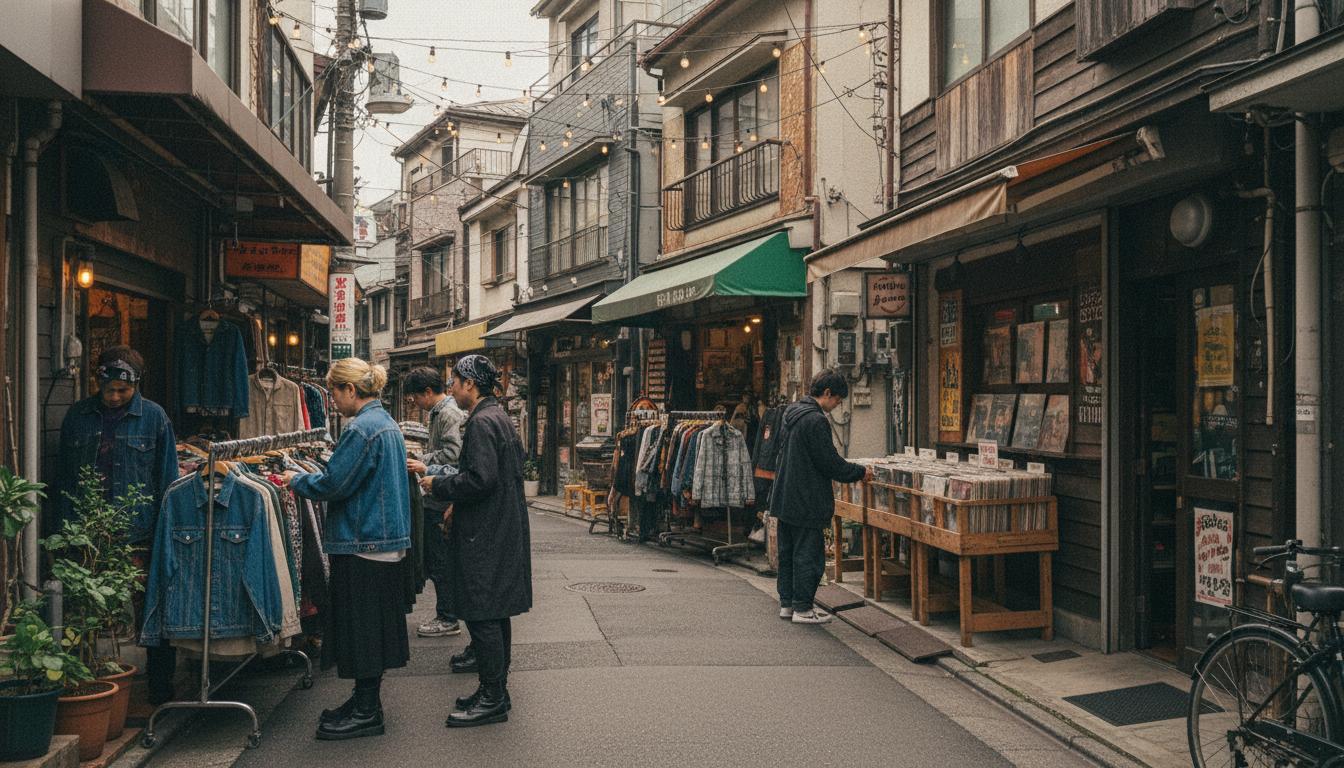
Shimokitazawa on a Saturday afternoon. If you can't find a vintage jacket here, you're not trying.
Shimokitazawa, or "Shimokita" if you want to sound like you've been there before, is Tokyo's official neighborhood for people who hate what Tokyo has become. No chain stores. No giant department buildings. No Don Quijote blaring its theme song. Just narrow winding streets, low-rise buildings, and enough vintage clothing shops to dress a small army of very stylish people who all look like they're in bands because half of them actually are.
The vibe here is immediately different from anywhere else in Tokyo. It's slower. The buildings are only two or three stories high because the area was designated a low-rise zone to preserve its character. You can walk down the middle of some streets because there's no car traffic. And everyone looks like they're in a band, because half of them actually are. The other half are in art school, or running coffee shops, or organizing small music festivals that you'll never hear about unless you follow the right Instagram accounts.
What to Expect
Vintage clothing is the main event. There are dozens of shops selling everything from 1960s American workwear to oversized Japanese designer pieces from the 90s. Chicago is the biggest and most well-known, with multiple locations in the neighborhood and prices that range from reasonable to "are you sure this flannel is worth 12,000 yen?" Flamingo is smaller but more curated, with a buyer who clearly has opinions about what deserves rack space. New York Joe Exchange has a thrift-store feel where prices are actually thrift-store appropriate, which is refreshing in a neighborhood where "vintage" sometimes just means "old and expensive."
Beyond clothes, Shimokita has excellent live music venues. The Shelter is a basement club that's been hosting punk and indie shows since the 90s. The sound system is deliberately rough, the crowd is enthusiastic, and the beer is cheap by Tokyo standards. Three hosts a mix of local and touring acts in a room that fits maybe 200 people if everyone breathes in. You'll sweat, you'll get stepped on, and you'll have one of the best nights of your trip. We saw a noise-rock band there last year that made our ears ring for two days, and we still talk about it.
Coffee is serious business here. The roster of third-wave coffee shops would take a full afternoon to work through. Bear Pond Espresso is famous for its dirty, strong shots and the owner's grouchy demeanor. He has rules. Follow them. It's worth it. There's also a surprising number of craft beer bars for a neighborhood this size, most of them tiny, all of them friendly. You'll find yourself having conversations with strangers at 2pm on a Tuesday because that's just the Shimokita way.
Where to Eat
Samurai is a standing ramen bar that fits about eight people. The tonkotsu broth is rich enough to coat a spoon and they don't care if you're a tourist as long as you order quickly and eat fast. For something lighter, the bakeries in Shimokita are excellent. Pelican Bakery has a tiny outpost here with their famously simple, perfect white bread. It's the kind of bread that makes you reconsider every sandwich you've ever eaten.
What NOT to Do
Don't try to navigate with a rigid plan. Shimokita's streets curve and intersect in ways that make no logical sense. The best approach is to pick a direction and wander. Don't take photos inside vintage shops without asking. The owners are protective of their spaces. And don't expect to cover it quickly. This neighborhood rewards slow exploration. We've been visiting for three years and we still find new shops every time we go. That's the point.
Koenji — Punk Rock Roots and the Best Cheap Eats
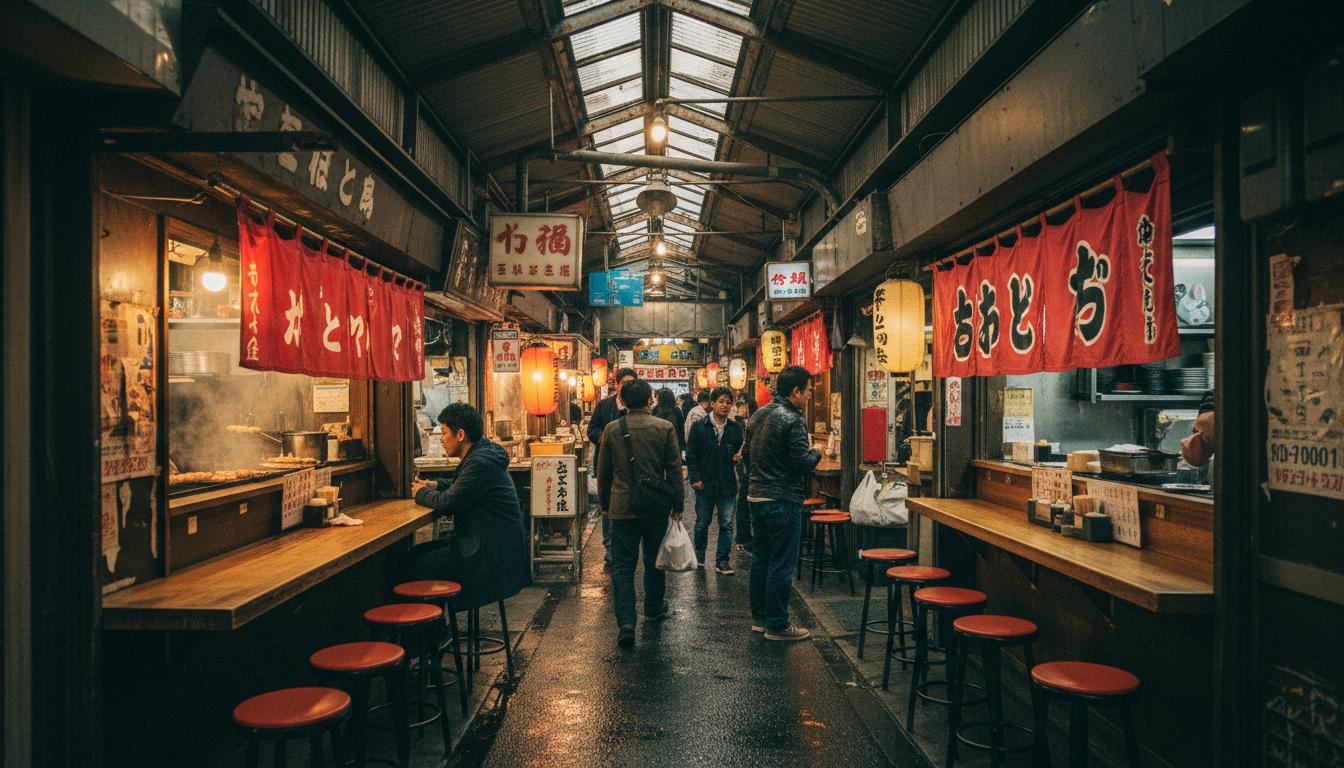
Harmonica Yokocho. The name comes from the harmonica-shaped layout. Allegedly.
Koenji is what happens when a neighborhood's main claim to fame is that it used to host the largest punk rock festival in Japan, and then the festival moved but the attitude stayed. This is Tokyo's anti-mainstream district, where you'll find vintage shops that look like they were arranged by a tornado, standing bars that charge 300 yen for a beer, and some of the best cheap food in the city. It's also where Alex lives, so this guide is either biased or extremely well-researched, depending on how charitable you're feeling.
Alex moved to Koenji after spending one evening in Harmonica Yokocho and deciding that this was the only Tokyo neighborhood that made sense to him. Three years later, he still feels that way. His apartment is 28 square meters, his favorite bar is a 3-minute walk away, and he can get excellent ramen at midnight without changing out of his house slippers. If that sounds like a lifestyle you could get behind, Koenji is your place.
What to Expect
The center of everything is the covered shopping street, Pal shopping arcade, which runs from the station's north exit. It's lined with vintage shops, record stores, small restaurants, and bars that open at 5pm and close when the last customer leaves. The further you get from the station, the weirder and more interesting it becomes. We've found shops selling nothing but Soviet-era electronics, a bar where the owner only plays cassette tapes, and a restaurant that serves only one dish: mapo tofu, and it is perfect.
Harmonica Yokocho is the jewel. This dense cluster of tiny bars and food stalls sits just north of the station, accessible through narrow passageways that feel like you're entering another era. Built in the post-war black market period, it still has that improvised, slightly illicit energy. Bars seat six people, max. Food stalls serve grilled meat on sticks and cold beer. Everyone talks to everyone because there's nowhere else to look. We've made more friends in Harmonica Yokocho than anywhere else in Tokyo, mostly because when you're sitting shoulder to shoulder with strangers, conversation becomes inevitable.
Koenji also has excellent live music. The small venues here lean punk, metal, and experimental, but you'll find everything if you look. 20,000 Den-ATS is a legendary punk venue in a basement near the station. Substore hosts more experimental stuff, noise and ambient and things that don't fit genres. There are at least a dozen more venues within a ten-minute walk. Show up on a Friday night, check the flyers taped to utility poles, and pick something at random. You might hate it, but you'll definitely remember it.
Where to Eat
This is where Koenji really shines. The standing bars along the Pal arcade offer cheap beer and small plates that are genuinely good. Torikizoku, a popular yakitori chain, has an outpost here where everything is 360 yen. The non-chain options are better, though. Look for the places with handwritten menus and smoke coming from the front. If there's a line of locals, join it. Whatever they're waiting for is probably excellent. We've followed crowds to some of our best meals in Tokyo, and we've never regretted it.
What NOT to Do
Don't be loud. Koenji has a reputation for being rowdier than other Tokyo neighborhoods, but that's just compared to Tokyo. By any other standard, it's still quiet and respectful. Don't expect English menus. Don't try to bar-hop efficiently. The point is to find one place you like and settle in. Order another beer. Talk to the person next to you. Let the night happen.
Yanaka — Old Tokyo, Cat Town, Slow Pace
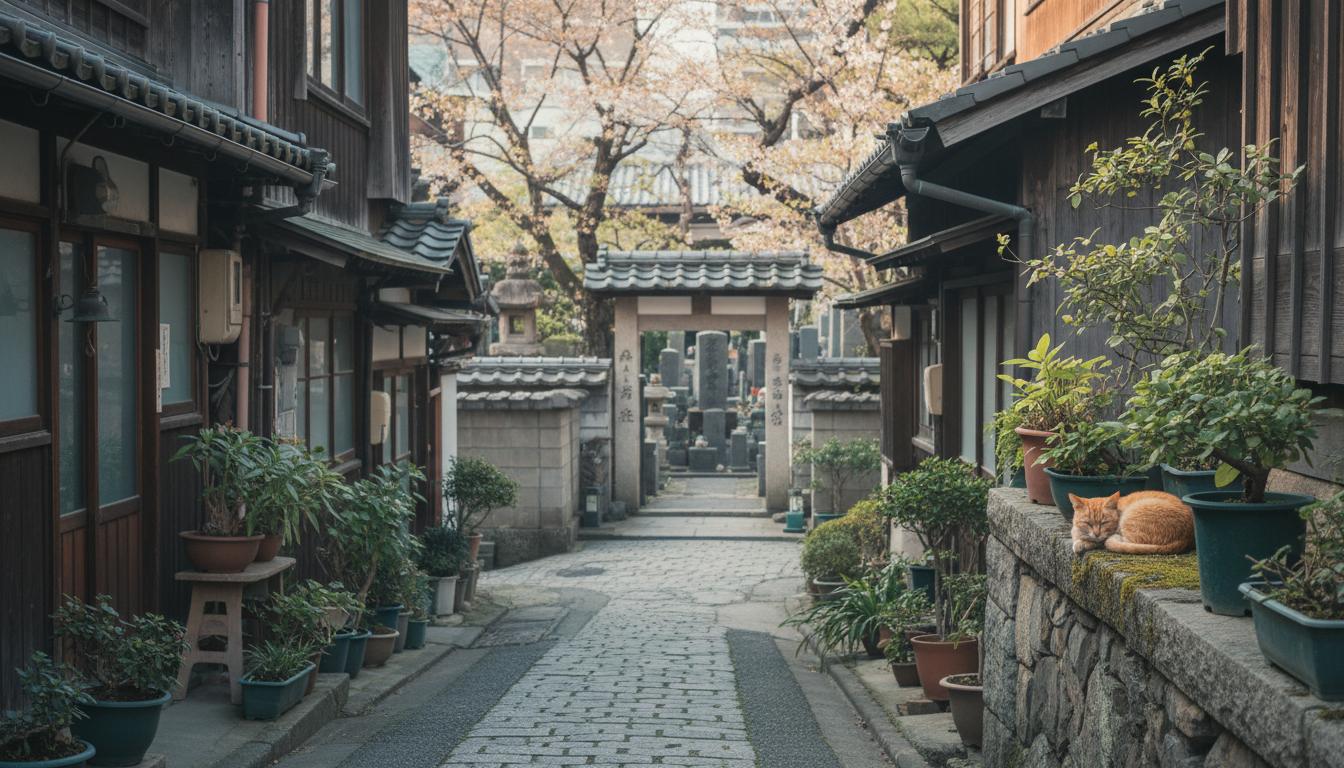
Yanaka Ginji. Cats outnumber tourists on a weekday morning.
Yanaka is what Tokyo looked like before it became Tokyo. Before the skyscrapers, before the neon, before 14 million people decided to live on top of each other. This neighborhood in the northeast, part of the larger Yanesen area along with Nezu and Sendagi, survived the 1923 earthquake and the WWII bombing largely intact. Walking through Yanaka is like stepping into a different century, one where people still know their neighbors and shopkeepers greet you by name even if you've never been there before.
The neighborhood is famous for its cats. Stray cats roam the streets, sun themselves on walls, and accept pats from anyone who stops. Local shopkeepers leave out food and water. There's even a cat-themed gift shop, Yanaka Ginza, which is more charming than it sounds. On a quiet morning, you'll see more cats than tourists, which is exactly the ratio you want. We've named at least three cats that we see regularly, and we're not even cat people. Yanaka does that to you.
What to Expect
Yanaka Ginza is the main shopping street, a sloped pedestrian lane lined with small shops selling traditional crafts, snacks, and souvenirs that don't feel tacky. At the bottom of the slope, a set of stairs leads up, framed by shops on both sides. It's the most photographed spot in the neighborhood, and it looks exactly like the photos. But the real Yanaka is in the side streets, where old wooden houses lean against each other and potted plants spill out onto the sidewalk.
The cemetery is one of Tokyo's largest and most peaceful. Graves are packed densely up a hillside, with pathways that wind between them. Stone lanterns, old trees, and the occasional cat create an atmosphere that's meditative rather than morbid. You can see Tokyo Sky Tree from the top of the hill, which creates a weird contrast between old and new that sums up this city perfectly. We walk through the cemetery every time we visit Yanaka, and it never gets old. It's a reminder that Tokyo existed long before the neon and the skyscrapers, and it'll exist long after.
There are galleries here, small museums, and craft workshops where you can try your hand at traditional arts. The Asakura Museum of Sculpture has a beautiful garden that's worth the admission price alone. The Japanese Garden, adjacent to the museum, charges a small admission fee and offers a meticulously maintained traditional landscape complete with tea house. The area around Nippori station has fabric shops that draw crafters from across the city. If you're into textiles, Nippori Fabric Town is a dangerous place. We've seen people spend entire days there and emerge with bags they can barely carry.
Where to Eat
Kayaba Coffee is a renovated traditional house that serves excellent coffee in a space that feels like a mid-century living room. It's become popular, so expect a wait on weekends. For something more low-key, the small restaurants along Yanaka Ginza serve traditional Japanese snacks and meals at reasonable prices. The menchi katsu (breaded and fried ground meat patties) sold from street stalls are a local specialty and cost about 200 yen each. Eat one while walking up the stairs at the end of the street. It's a Yanaka ritual.
What NOT to Do
Don't expect nightlife. Yanaka shuts down early and doesn't really have a bar scene. Don't disturb the cats. They're community members, not attractions. And don't rush. Yanaka is the antidote to Tokyo's frenetic pace. Move slowly, look at the architecture, and let the neighborhood reveal itself. The best Yanaka experience is one where you have nowhere to be and nothing to do except walk and notice things.
Nakazakicho — Retro Cafes, Narrow Lanes, No Tourists Yet
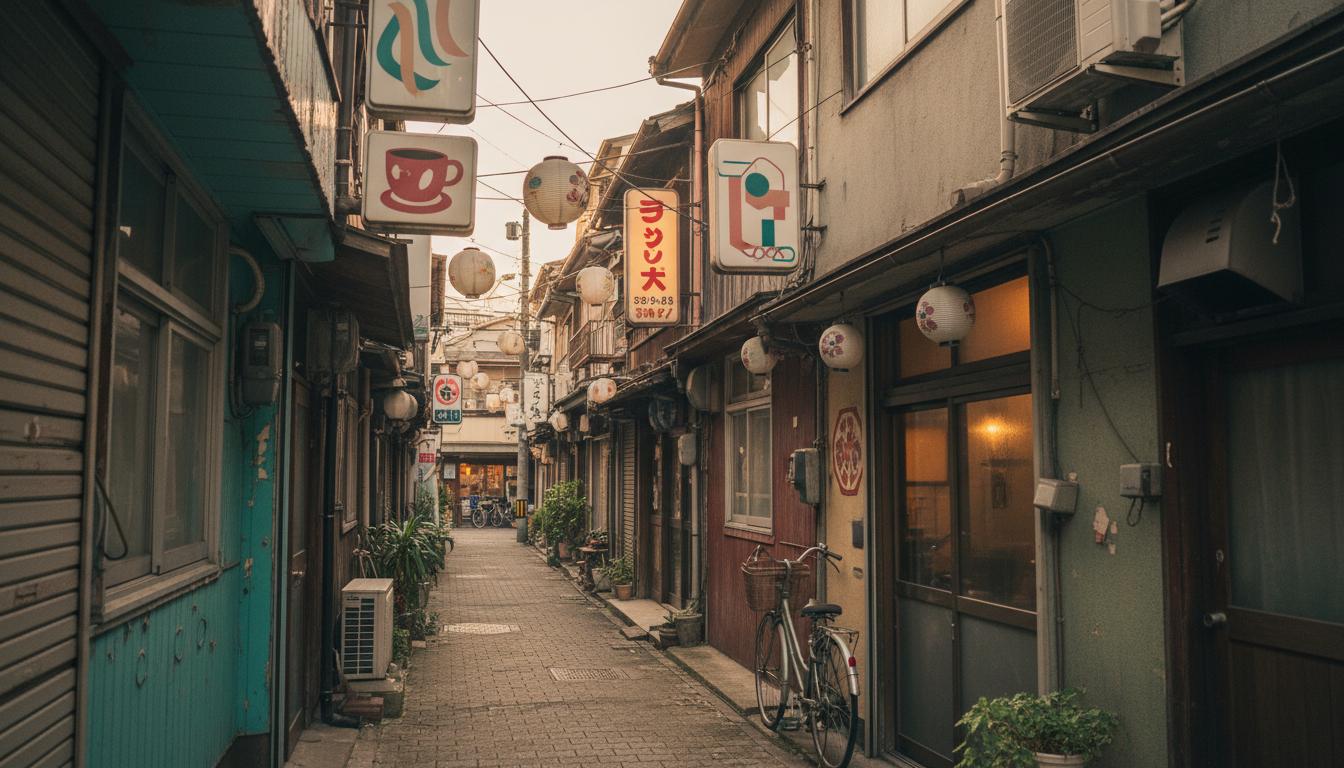
Nakazakicho on a Sunday. You might be the only non-local.
We almost don't want to write about Nakazakicho because it's the rare Japanese neighborhood that hasn't been discovered yet. In a country where "off the beaten path" usually means "only 500 Instagram posts instead of 50,000," Nakazakicho is genuinely under the radar. Located in Osaka, a short train ride from the city center, it feels like stepping into a time machine set to 1970s Japan. The buildings are old, the streets are narrow, and the pace of life is noticeably slower than the rest of Osaka, which is saying something because Osaka is already more relaxed than Tokyo.
The neighborhood is a maze of narrow lanes, many of them too small for cars, lined with old wooden houses that have been converted into tiny shops, galleries, and cafes. Some of these buildings are over a hundred years old, survivors of Osaka's rapid post-war development. The result is an area that feels discovered rather than designed, authentic rather than curated. You won't find carefully branded "local experiences" here. You'll find actual local people doing actual local things, which is increasingly rare in Japanese cities.
What to Expect
Kissaten are the main attraction here. These old-school Japanese coffee shops, with their dark wood interiors, hand-drip coffee, and jazz records playing in the background, are a dying breed across Japan. Nakazakicho has enough of them to fill a full afternoon of slow sipping and people-watching. Each one has its own personality. Some are silent reading rooms where the only sound is the turning of pages and the occasional pour. Others are social hubs where regulars gather to argue about baseball and complain about the weather. We've spent entire days just cafe-hopping here, and each stop felt completely different from the last.
The vintage and antique shops here are different from Tokyo's curated scene. These are proper junk shops, filled with Showa-era ceramics, old magazines, film cameras that may or may not work, and household items from decades past. Prices are low because the owners seem more interested in clearing space than making profit. We've found 500-yen film cameras and hand-painted ceramics for less than a coffee. It's the kind of shopping that feels like treasure hunting rather than consuming.
Art galleries are scattered throughout the neighborhood, many of them tiny one-room spaces in converted houses. There are also craft workshops where you can watch artisans at work. The area has become popular with young Osaka creatives who can't afford Tokyo rents, which gives it a youthful energy that contrasts with the old buildings. You'll see handmade jewelry, screen-printed posters, and ceramic works that are genuinely original and surprisingly affordable.
Where to Eat
Salon de AManTo is a converted traditional house with a garden, serving coffee and light meals in a space that feels like a secret. It's been here for years and the regulars treat it like a second living room. For something more substantial, the area around the station has ramen shops and small restaurants that serve Osaka-style comfort food. The takoyaki in this neighborhood is better than what you'll find in Dotonbori, partly because the shops aren't catering to tourists and can focus on quality rather than speed.
What NOT to Do
Don't come expecting nightlife. Nakazakicho is a daytime neighborhood. Don't take photos of people without asking. This is a residential area where people actually live, not a tourist zone. And don't tell too many people. Let's keep this one between us. The last thing Nakazakicho needs is a sudden influx of influencers with ring lights.
Golden Gai — 200 Tiny Bars, Cash Only, Don't Be Loud
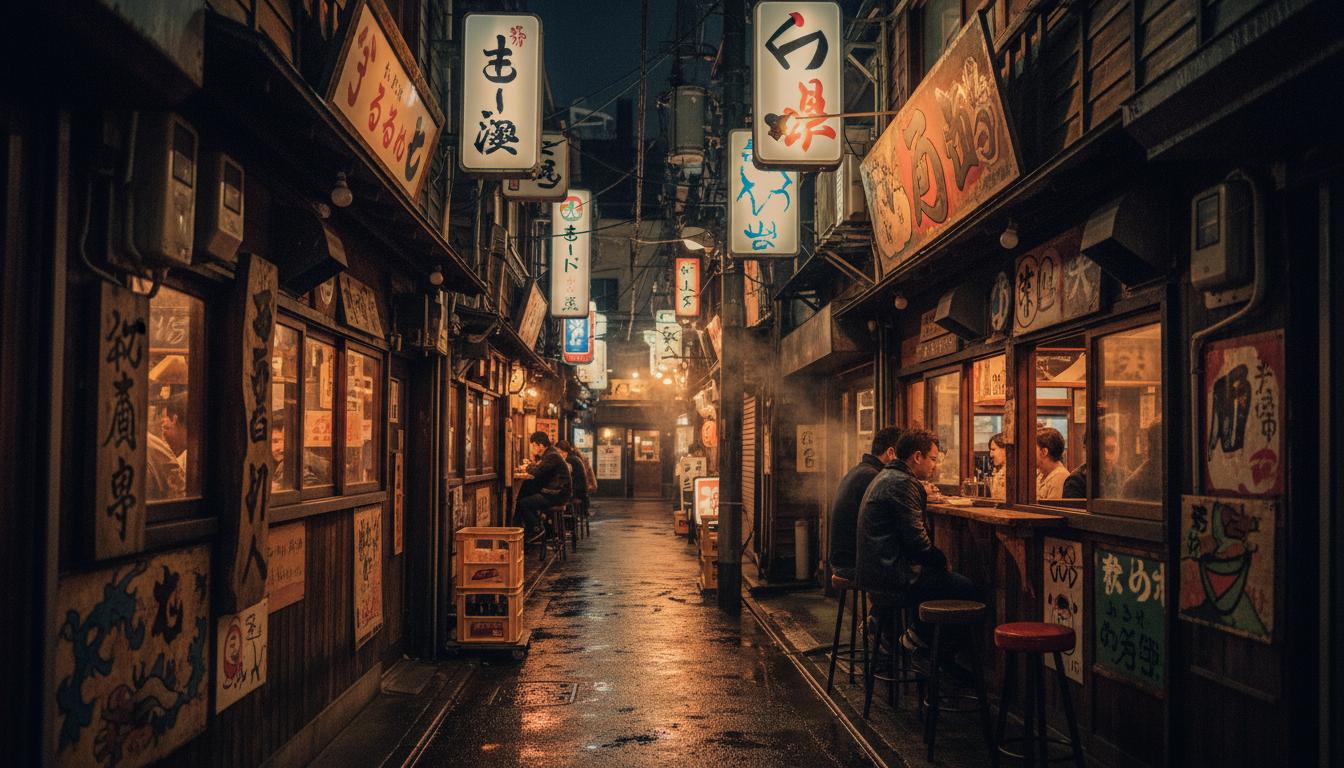
Golden Gai at midnight. Six seats per bar. Zero personal space. Maximum character.
Golden Gai is amazing and also kind of a tourist trap now. Go anyway, but don't expect to find a 500 yen beer. This tiny district in Shinjuku, squeezed between the Kabukicho nightlife zone and the Hanazono Shrine, contains roughly 200 bars spread across six narrow alleys. Most of them seat fewer than ten people. Some seat four. A few might seat six if everyone exhales at the same time. It's one of the most unique drinking experiences in the world, and it manages to be both incredibly touristy and surprisingly authentic at the same time.
The area has a fascinating history. In the post-war era, Golden Gai was a black market and red-light district. By the 1960s, it had transformed into a bohemian enclave for artists, writers, and musicians. Many of the bars have been run by the same owners for decades, and each one has its own distinct personality, regular clientele, and often its own rules. Some bars only serve regulars. Some charge higher covers for non-Japanese speakers. Some will welcome you like family. You never know until you walk in.
What to Expect
Each bar is its own universe. Some cater to musicians and have guitars hanging on the walls. Some are themed around specific hobbies, like film photography or mountaineering. Some are just a counter, a few bottles, and an owner who's been pouring drinks since before you were born. The diversity is the point. You could visit Golden Gai fifty times and have a different experience each night. We've been going for years and we still find new places that surprise us.
Most bars charge a cover fee, usually between 500 and 1,000 yen per person. Drinks start around 700 yen and go up from there. This is not a cheap night out. Some bars also have a minimum drink order. The cover fee is standard in Japanese nightlife, but tourists are often surprised by it. Think of it as renting your seat. For the price of one overpriced cocktail in a New York hotel bar, you get an intimate, unique experience that you'll remember for years.
The alleys are atmospheric in a way that feels almost staged. Overhead, a tangle of wires and lanterns creates a canopy that glows at night. The buildings lean toward each other like they're sharing secrets. During the day, it's quiet and almost eerie. At night, it's alive with conversation spilling out of doorways. Walk the alleys slowly. Read the signs. Peek into doorways. The bar that looks intimidating from outside might be the one where you have the best conversation of your trip.
Where to Drink
We don't name specific bars because the scene changes too quickly. Bars close, new ones open, and recommendations become outdated fast. Instead, here's our strategy: walk the alleys, look for a place with a few open seats and an atmosphere that appeals to you, and walk in. If there's a cover charge you don't want to pay, politely decline and move on. The best bars in Golden Gai are the ones that feel right in the moment. Trust your instincts and don't overthink it.
What NOT to Do
Don't be loud. These are tiny spaces and sound carries. Don't bring large groups. Most bars literally can't fit you. Don't take photos without asking. Many bars have a no-photos policy. And don't stay at one bar all night. The whole point is to experience the variety. Move around. Try three or four places. Have one drink at each. That's the Golden Gai way.
Ohori Park — Fukuoka's Calm Center
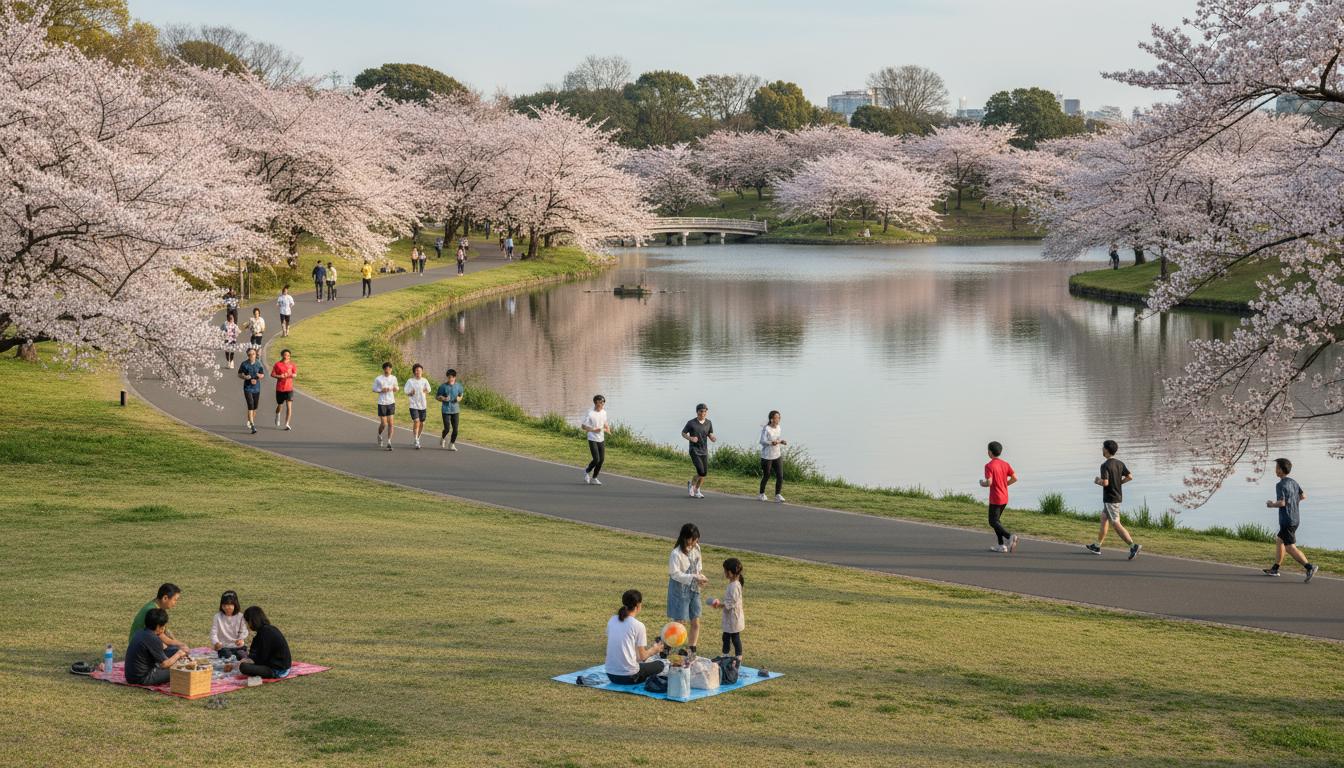
Ohori Park on a spring weekend. Joggers, picnickers, and zero stress.
Not every great Tokyo neighborhood is in Tokyo, and not every Japanese city experience needs to be intense. Ohori Park, in Fukuoka, is the antidote to the sensory overload of Tokyo and Osaka. A large park built around a lake, with jogging paths, traditional gardens, art museums, and some of the most relaxed city energy in Japan. Mei grew up here, and she'll tell you that this park is where the city goes to decompress. Joggers do their morning laps. Families picnic on the grass. Old men play shogi on portable boards. Couples walk hand in hand along the paths that connect the small islands in the lake's center.
It's not exciting, and that's exactly the point. After spending a week in Tokyo, coming to Ohori Park feels like lowering the volume on the world. The pace slows down. People smile more. There's no rush, no competition, no sense that you're missing something if you're not moving at maximum speed. It's the kind of place where you sit on a bench and realize you've been staring at the water for twenty minutes, and that's perfectly fine.
What to Expect
The park is built around a large lake that was once connected to the sea. A 2-kilometer jogging path circles it, and on any given morning you'll see hundreds of runners. The path is flat, well-maintained, and scenic enough that you forget you're exercising. Benches line the route for when you need to pretend you're just enjoying the view and not catching your breath. We've "enjoyed the view" many times after attempting to keep up with local runners who make it look effortless.
In the center of the lake, a series of bridges connects small islands in a design inspired by West Lake in Hangzhou, China. Walking across these bridges, with water on all sides and the Fukuoka city skyline in the background, is one of the most peaceful urban experiences in Japan. It's the kind of place where you sit on a bench and realize you've been staring at the water for twenty minutes. That happens a lot here. Time moves differently around this lake.
The Fukuoka Art Museum sits at the park's edge, with a collection that includes works by Salvador Dali and local Japanese artists. The Japanese Garden, adjacent to the museum, charges a small admission fee and offers a meticulously maintained traditional landscape complete with tea house. The park also hosts events throughout the year, from fireworks festivals to outdoor concerts. If you're visiting in spring, the cherry blossoms around the lake are spectacular without being overcrowded like Tokyo's famous spots.
Where to Eat
The area around the park has excellent food options. The nearby yatai stalls along the river come alive at night and are some of the best in Fukuoka. For daytime, the park has a few cafes, and the surrounding neighborhood has restaurants ranging from casual to upscale. The shopping streets near Akasaka station, a short walk away, have plenty of lunch options. Mei's personal recommendation is a tiny udon shop just north of the park that makes noodles by hand every morning. We can't tell you the name because it doesn't really have one, just a noren curtain and a line of locals.
What NOT to Do
Don't expect excitement. Ohori Park is about calm, not thrills. Don't skip the surrounding area. The neighborhood around the park has great food and a relaxed atmosphere that's worth exploring. And don't visit Fukuoka without spending at least one evening at the yatai stalls along the river. The park is the calm center, but the yatai are where Fukuoka's real personality shines.
We've walked every one of these neighborhoods more times than we can count. Some of them have become like second homes. Others still surprise us after dozens of visits. The thing about Tokyo, and Japan in general, is that you never really finish exploring it. There's always another alley, another bar, another neighborhood that nobody's talking about yet. We'll keep walking, and we'll keep writing it down. That's the promise we make to our readers and to ourselves. Every neighborhood on this list earned its spot through repeated visits, honest evaluation, and the kind of genuine affection that only comes from spending real time in a place. We hope you find your own favorites among them, and we hope you discover places we haven't found yet. Tell us about them when you do.