Tokyo has a reputation as a city that never sleeps. This is partially true. The trains stop at midnight, many restaurants close by 10pm, and the streets in residential neighborhoods get quiet surprisingly early. But in the districts that do stay awake, Japan's nightlife is unlike anything else. Here's how to navigate it without ending up stranded, hungry, or confused. We've been all three, and we're writing this so you don't have to be.
Last Food Orders — The 10pm Deadline
Here's something that shocks most first-time visitors: a lot of Japanese restaurants stop taking orders at 9pm or 10pm. Not they close at 10pm. They stop serving at 10pm, which means you need to be seated and ordering by 9:30pm at the latest. If you wander out at 9:45pm looking for dinner, you will struggle. This is especially true outside major nightlife districts. In residential neighborhoods, the kitchen might close at 8:30pm.
The reasons are practical. Japanese restaurants prepare fresh ingredients daily. They don't keep a deep inventory. When the food runs out, they close. Many kitchen staff start prep work at 6am, so by 10pm they've been working for sixteen hours. They want to go home. You would too. This is a fundamentally different approach from Western restaurants that stay open until a posted closing time regardless of whether anyone is still ordering.
In nightlife districts like Shibuya, Shinjuku, and Dotonbori, you'll find places serving later. Izakayas typically take last orders around 10:30pm to 11pm. Ramen shops might stay open until midnight or later. And in any Japanese city, the konbini is your 24-hour safety net for hot food, snacks, and microwaveable meals that are better than they have any right to be. We've had some genuinely great meals from konbini at 11:30pm when everything else was closed.
Our advice: plan your dinners earlier than you would at home. Aim to be seated by 8pm. If you want a late meal, know your options in advance. Ramen shops often stay open late. Some standing bars serve until the last customer leaves. And the konbini is always there, silently judging your midnight fried chicken purchase. We've learned to embrace the konbini dinner. It's not giving up. It's adapting to local customs.
Izakaya Culture — Shared Plates and All-You-Can-Drink
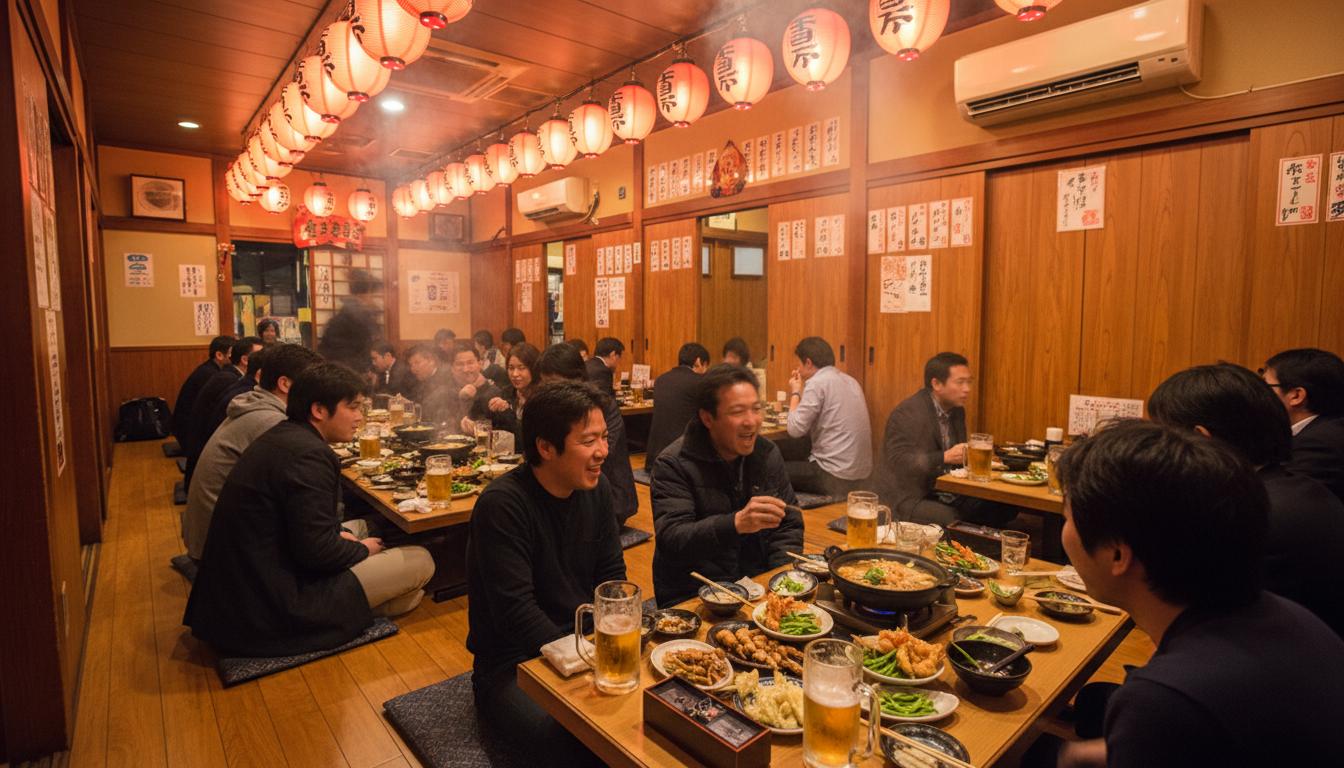
Izakaya. Shared plates, pitchers of beer, and no one checks the time.
The izakaya is Japan's answer to the pub, the tapas bar, and the neighborhood grill rolled into one. It's a casual restaurant where groups gather around a table, order a variety of small plates to share, and drink steadily throughout the evening. The atmosphere is loud, smoky in the ones that still allow it, and convivial in a way that feels distinctly Japanese. This is where salarymen decompress after work, where friends celebrate birthdays, and where strangers become drinking buddies over shared plates of fried chicken.
Izakaya menus are extensive. Grilled chicken skewers, fried chicken, sashimi, salads, stews, tofu dishes, pickles, rice balls, and seasonal specialties. The idea is to order a few things, eat them, order more. Rounds of food arrive as they're ready, creating a continuous flow of eating and drinking that can stretch for hours. We've had izakaya dinners that lasted four hours and involved fifteen different dishes. That's the point. It's not a quick meal. It's an experience.
Many izakayas offer nomihoudai, which means all-you-can-drink. For a set price, usually between 1,500 and 3,000 yen for a time limit of 90 to 120 minutes, you can drink as much beer, sake, shochu, and cocktails as you want. The catch is that everyone at the table usually has to participate, and there are rules. You can't share drinks. You can't order your next drink until you finish your current one. And when time's up, you pay and leave. We've done nomihoudai responsibly and we've done it irresponsibly. Both were fun, but only one led to a headache the next morning.
Smoking is still allowed in many izakayas, though this is slowly changing as Tokyo's indoor smoking ban expands. If smoke bothers you, look for places with smoking and non-smoking sections, or check if the restaurant is entirely non-smoking. Chains like Watami and Torikizoku are generally smoke-free or have separate sections. The small independent places are more likely to allow smoking everywhere, which is something to be aware of if you're sensitive to it.
The best izakayas are local neighborhood places that have been around for decades. The owner knows the regulars by name. The menu hasn't changed in years. The decor is a collection of beer posters, handwritten signs, and memorabilia accumulated over generations. These places rarely have English menus, but they're always worth the effort of pointing and guessing. We've had our best izakaya experiences at places where we couldn't read a single word on the menu.
Night Districts — Kabukicho, Dotonbori, Nakasu
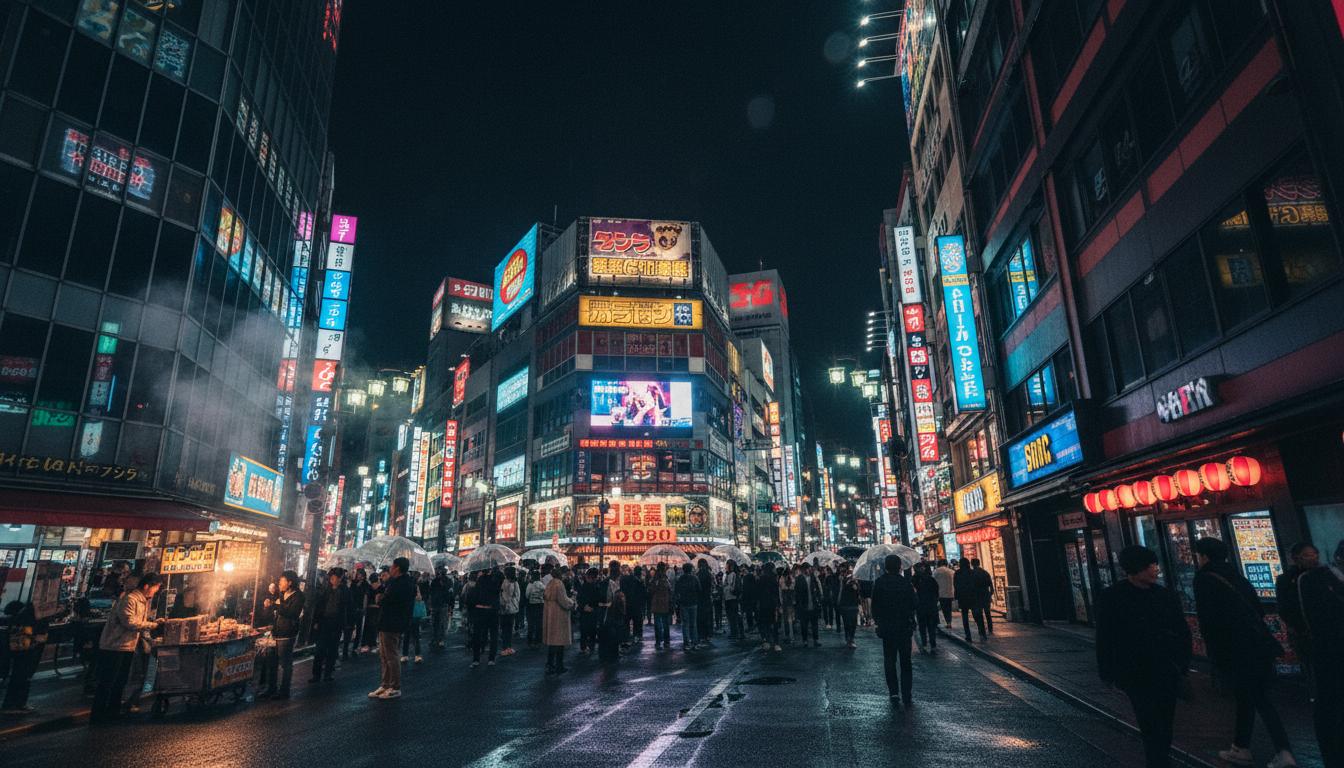
Kabukicho. Shiny, chaotic, and slightly sketchy. Fun if you know what you're doing.
Japan's major night districts each have their own personality, and choosing the right one depends on what kind of night you're looking for. Kabukicho in Shinjuku is the biggest and most notorious. It's flashy, chaotic, and slightly sketchy in a way that Tokyo rarely is. The neon is overwhelming. The touts stand outside clubs trying to pull in customers. And somewhere in the chaos, there are genuinely good bars and restaurants if you know where to look. We've been going to Kabukicho for years, and we still find new places every time.
Kabukicho has a reputation as Tokyo's red-light district, and that's partially accurate. There are host and hostess clubs, love hotels, and establishments that cater to adult entertainment. But it's also home to some excellent restaurants, the Robot Restaurant (which is more spectacle than dinner), and Golden Gai just around the corner. The area is safe, despite the edgy atmosphere. Police presence is heavy, and violent crime is virtually nonexistent. We've walked through Kabukicho at 3am more times than we can count, and the worst thing that's ever happened is someone tried to hand us a flyer for a club.
Dotonbori in Osaka is louder and more fun than Kabukicho. The famous Glico running man sign presides over a canal lined with restaurants, bars, and shops that stay open late. The energy here is pure Osaka: direct, boisterous, and aggressively friendly. Street food is everywhere. Takoyaki, okonomiyaki, and kushikatsu stalls line the main drag. It's touristy, yes, but it's also genuinely entertaining. We visit Dotonbori every time we're in Osaka, and we always end up eating too much and laughing too hard.
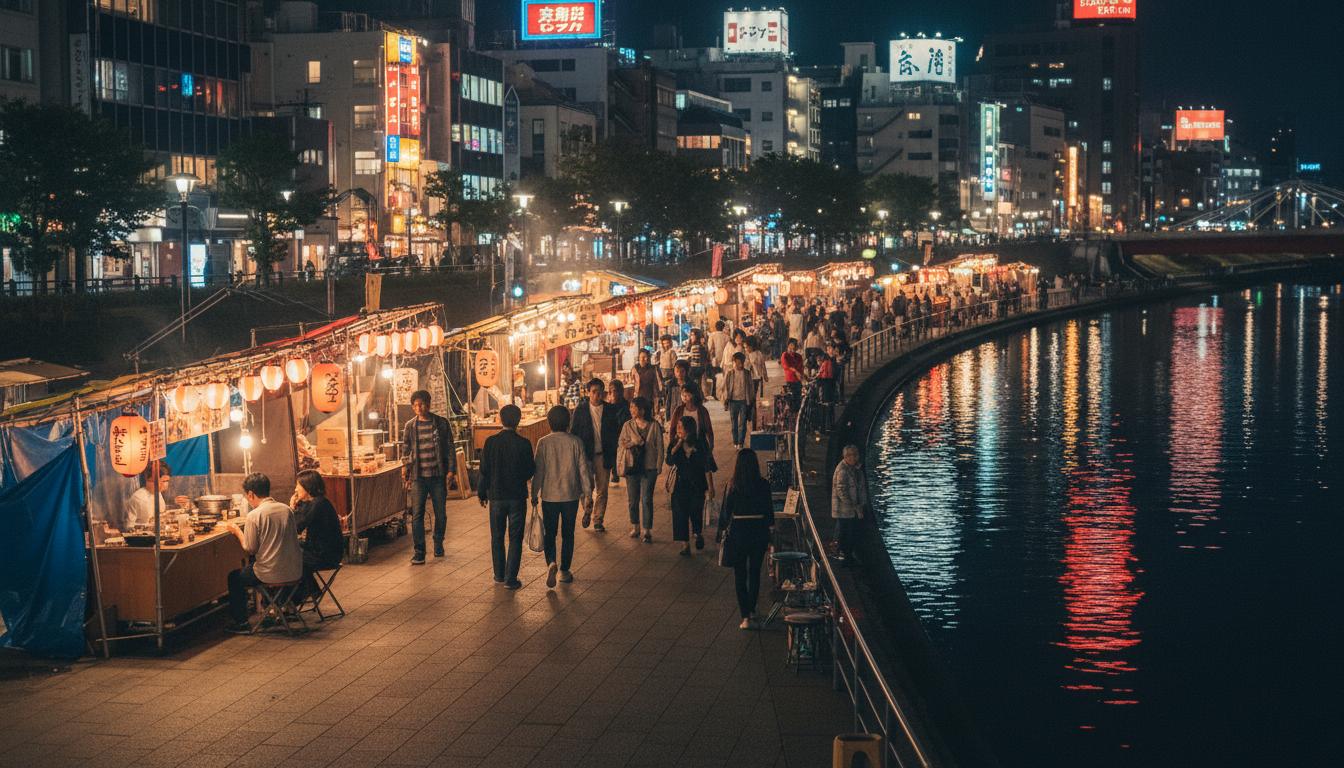
Nakasu in Fukuoka. Yatai stalls, river breeze, and the best late-night food in Japan.
Nakasu in Fukuoka is our personal favorite. Located on a sandbank between two rivers, this district comes alive at night with yatai food stalls, neon signs reflecting off the water, and a more relaxed atmosphere than Tokyo or Osaka. The yatai are the main draw. These wooden food carts serve ramen, oden, yakitori, and drinks to customers seated on stools at the counter. It's the most social eating experience in Japan. You'll talk to the owner, you'll talk to the person next to you, and you'll eat some of the best food in the country. Mei's favorite yatai is run by a guy named Tanaka-san who makes ramen with a broth that takes three days to prepare. We've eaten there at least twenty times, and it never disappoints.
Safety — Remarkably Safe, But Use Common Sense
Japan is one of the safest countries in the world. Violent crime against tourists is virtually unheard of. You can walk through any neighborhood at 3am and your biggest risk is boredom. That said, drunk people exist everywhere, and Japan has its share of them. The most common issue at night is drunk salarymen. After a night of nomihoudai, some Japanese office workers become loud, overly friendly, or occasionally aggressive. They're almost always harmless, but they can be annoying. The best approach is to ignore them and keep walking. If someone is genuinely bothering you, go into the nearest konbini or restaurant. Staff will help.
Scams targeting tourists are rare but exist, mostly in Kabukicho. Touts offering "cheap" drinks or entry to clubs should be ignored. Some establishments charge exorbitant prices to foreigners who don't read the fine print. Stick to places with visible price lists, and if something feels wrong, leave. Trust your instincts. If a deal seems too good to be true, it definitely is. We've never been scammed in Japan, but we've seen people who were, and it always started with following a tout into a basement club.
Late Transport — Last Train vs Taxi vs Hotel
We covered last train culture in our transit guide, but it bears repeating: the last train is around midnight, and missing it is expensive. A taxi from central Tokyo to the outer wards can cost 5,000 to 10,000 yen. From Tokyo to Yokohama, expect 15,000 yen or more. If you're planning a big night out, either stay near where you're drinking or budget for a taxi. There are no good cheap options after midnight.
Capsule hotels near major stations are the budget-friendly alternative. For 3,000 to 5,000 yen, you get a private sleeping pod, shared bathrooms, and usually a sento-style bath. It's not glamorous, but it's clean and functional. Some capsule hotels now offer larger pods designed for international travelers who might find the standard size claustrophobic. We've stayed in capsules that felt like cozy cocoons and capsules that felt like punishment. Read reviews before you book.
Convenience Store Dinner — Actually a Good Option
We've said it before and we'll say it again: konbini food is good. Really good. If you find yourself hungry at 11pm with nowhere to sit down, walk into a Lawson, 7-Eleven, or FamilyMart and see what they have. Fresh onigiri, hot fried chicken, pasta salads, sandwiches, and a constantly rotating selection of seasonal items. Heat it up in the store microwave, eat at the small counter by the window, and watch the city walk by. It's one of the most underrated dining experiences in Japan.
Some of our best meals in Japan have been konbini dinners eaten on a hotel bed while watching Japanese TV we couldn't understand. It's not fine dining. It's real life. And real life in Japan includes excellent food available 24 hours a day from a store the size of a large closet. The egg salad sandwich from FamilyMart is a particular favorite. Alex will defend that sandwich against any criticism, and he has strong opinions about sandwiches.
Capsule Hotels — If You Miss the Last Train
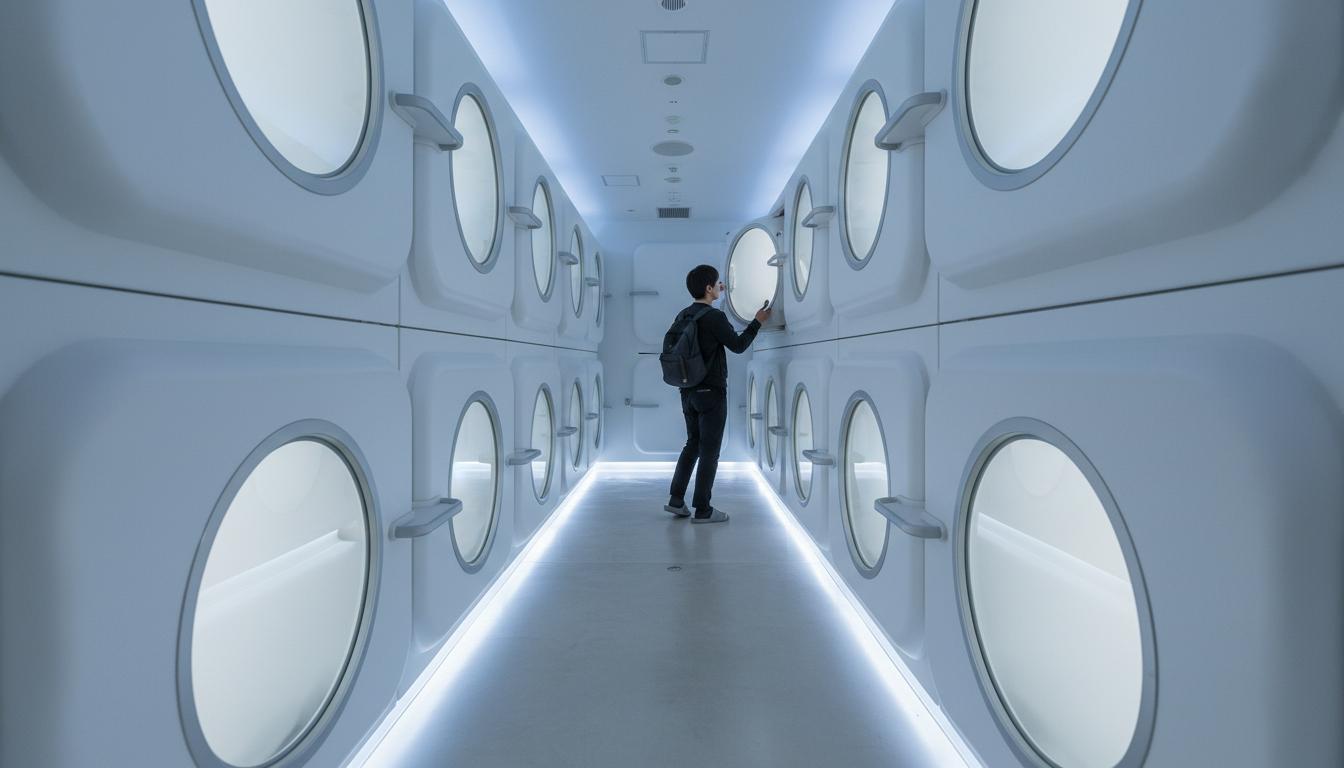
Capsule hotel. Not glamorous, but better than a 10,000 yen taxi ride.
Capsule hotels were invented in Japan, and they remain the country's most practical solution to the last train problem. You check in, receive a bag with slippers and a yukata, stash your shoes in a locker, and climb into your assigned pod. The pod has a TV, outlets, a reading light, and enough room to lie down if you don't mind enclosed spaces. Bathrooms and baths are shared. It's like sleeping in a very clean, very quiet dormitory.
The experience varies dramatically by hotel. Some are clean, modern, and almost luxurious. Others are dated, cramped, and smell like they've been housing salarymen since the 1980s. Read reviews before booking. Look for places with good bathing facilities, because a long soak in the communal bath is the best part of the capsule hotel experience. We once stayed at a capsule hotel with a rooftop onsen. For 4,000 yen. In Tokyo. That's the kind of value that makes capsule hotels worth considering even if you haven't missed the last train.
Most capsule hotels are men-only, though the number of gender-segregated and women-friendly options is growing. Women-only floors or sections are becoming standard in newer locations. Check before you book if this is a concern. The women-only capsules we've seen are generally nicer than the men's facilities, with better amenities and cleaner bathrooms.
Is it comfortable? Not really. Is it better than a taxi that costs more than your flight? Absolutely. And it's a uniquely Japanese experience that every visitor should try at least once. There's something oddly satisfying about the capsule hotel routine. The shoe locker, the yukata, the silent pod, the shared bath in the morning. It's efficient, egalitarian, and strangely comforting. Japan in a nutshell.
Finding Late-Night Food That Isn't a Konbini
Yes, konbini are great. But sometimes you want a proper meal at 11pm, and finding one takes some knowledge. Ramen shops are your best bet. Many stay open until midnight or later, especially in nightlife districts. Ichiran and Ippudo, the two biggest chains, typically stay open until 2am or 3am in central locations. The quality is consistent, and the ordering process is automated enough that language isn't a barrier. You buy a ticket from a vending machine, hand it to the staff, and wait for your bowl.
Some standing bars also serve food late. If you find a tachinomiya that's still open after 10pm, they'll usually have a limited food menu available. It won't be elaborate. Maybe some grilled meat, maybe some pickles, maybe a plate of edamame. But it's real food, eaten in a real establishment, and sometimes that's what you need after a long day of walking. We've ended many nights at standing bars with a beer and a plate of something grilled, chatting with whoever else decided that sleep was less important than one more round.
In Shinjuku, the area around Shinjuku Sanchome has multiple ramen shops that stay open until 4am or 5am. In Shibuya, the area west of the station, toward Dogenzaka, has late-night options that cater to people who missed the last train and aren't ready for bed yet. In Osaka, Dotonbori never really sleeps. You can find takoyaki and okonomiyaki at 2am without trying very hard. Fukuoka's yatai stalls start setting up around 6pm and stay open until 1am or 2am, making them the best late-night food option in the country.
The Morning After
If you drank too much in Japan, you'll want to know about the country's excellent hangover food culture. Ramen is the obvious choice. A rich, salty broth replenishes what alcohol depleted. But there are other options. Gyudon chains like Yoshinoya and Matsuya are open 24 hours and serve beef bowls that somehow taste medicinal when you're hungover. Curry houses often open early and serve thick, spicy curry that clears your head whether you want it to or not.
Japan also has convenience store hangover drinks. Pocari Sweat, Aquarius, and various vitamin drinks are sold at every konbini and are specifically marketed for recovery. They actually work, mostly because dehydration is the main cause of hangovers and these drinks rehydrate you faster than water. Drink one before bed and one in the morning. It's not a cure, but it helps. We've tested this extensively. For science.
Women and Nightlife in Japan
Japan is generally very safe for women at night, but there are specific considerations worth knowing about. The women-only train cars during morning rush hour exist for a reason. Chikan, or groping on crowded trains, remains a problem despite increased enforcement. At night, stick to well-lit areas and main streets. Avoid Kabukicho's back alleys if you're alone. Trust your instincts. If a bar feels wrong, leave. The vast majority of Japanese nightlife establishments are safe and respectful, but bad actors exist everywhere.
Many izakayas are still smoking-friendly, which can be unpleasant if you're sensitive to smoke. Look for places with non-smoking sections or check online reviews for smoke levels. Some chains like Watami and Torikizoku are fully non-smoking. The smaller independent places are more of a gamble. If smoke is a dealbreaker for you, research ahead of time or stick to the chains. We've walked out of bars that were too smoky, and nobody has ever been offended by us leaving.
Solo female travelers will find that Japan is one of the safest countries in the world for women traveling alone. We've all done it, repeatedly, without incident. The key is the same as anywhere: be aware of your surroundings, don't accept drinks from strangers, and have a plan for getting back to your accommodation. The last train issue affects everyone, regardless of gender. Have a backup plan, whether that's a capsule hotel reservation, a taxi budget, or just the willingness to stay out until 5am.
Photography at Night
Sam has strong opinions about photographing Japan at night, and since he's the one with the camera, we listen to him. His advice: shoot on film if you can, embrace the fluorescent lighting, and don't try to make everything look pretty. Some of the best night photos of Japan are gritty, grainy, and slightly out of focus. The neon doesn't need to be perfect. The alley doesn't need to be clean. The salaryman stumbling out of the izakaya doesn't need to be posed. Real is better than perfect when it comes to night photography.
If you're shooting digital, turn off your flash. Nothing ruins a night photo like harsh flash lighting. Embrace the high ISO noise. Use the ambient light from signs and streetlamps. If you're shooting on your phone, most modern phones have excellent night modes that handle low light surprisingly well. Just don't use the flash. Seriously. Turn it off. Sam will find you and judge you, and his judgment is withering.
Planning Your Night Out
The key to a good night in Japan is planning around the last train. Check the schedule before you go out. Know which line you need, which station you're going to, and what time the last train departs. Set a phone alarm for 30 minutes before the last train. This sounds rigid, but it removes the anxiety of constantly checking the time and lets you actually enjoy yourself.
If you're planning to drink heavily, consider staying within walking distance of your hotel, or budget for a taxi, or just accept that you might sleep in a capsule hotel. All three options are valid. We've done all three, sometimes on consecutive nights. The capsule hotel experience is worth having at least once, even if you don't miss the last train. Think of it as a cultural activity rather than a last resort.
Start your evening with food. Eat a proper dinner before you start drinking. Japanese drinking culture assumes you've eaten, and drinking on an empty stomach is a bad idea anywhere in the world. An izakaya is the perfect starting point because you get food and drinks in the same place. Then move to bars. Then, if you're still going, end with ramen or konbini food before you crash. That's the classic Japanese night out, and it's a template that works every time.
Safety Tips That Actually Matter
Japan is remarkably safe at night, but that doesn't mean you should be careless. Keep your valuables secure. Don't leave your bag on the back of your chair at a bar. Don't flash large amounts of cash. These are common-sense precautions that apply everywhere. The drunk salarymen we mentioned earlier are almost always harmless, but they can be persistent. A firm "sumimasen" and walking away is usually enough.
In Kabukicho specifically, avoid the touts. They're trying to get you into clubs with inflated prices. Don't follow anyone into a basement or side street. If a deal sounds too good, it's a scam. Stick to established bars with visible prices. Golden Gai is generally safe but tiny and easy to get turned around in. Keep track of which alley you entered through. Some of them look very similar at 1am after several highballs. If you have a terrible sense of direction, consider dropping a pin on your phone map when you arrive, so you can find your way back out. We've learned this lesson the hard way, wandering in circles between alleys that all look identical. Golden Gai is magical, but it's also a maze. Respect the maze, and it will reward you. Underestimate it, and you'll be lost until dawn. Carry a charged phone. Drop a pin on your map. Trust us on this one. We speak from painful personal experience.
Karaoke — The Great Equalizer
No guide to Japanese nightlife is complete without mentioning karaoke. The private booth karaoke system in Japan is superior to anything in the West. You and your friends get a private room with a touchscreen song selection system, unlimited drinks, and terrible acoustics that somehow make everyone sound better. Big Echo and Karaoke Kan are the major chains, with locations everywhere. A typical two-hour session costs around 2,000 yen per person including drinks. Go after midnight for cheaper rates. Go with people you don't mind hearing you sing badly.